AIO & GEO

Be the answer in AI search

Millions of buyers now ask ChatGPT, Google AI Overviews, Claude, Perplexity, and Gemini before they ever open a search results page. Our AI optimization (AIO) and generative engine optimization (GEO) service makes your brand the answer these AI systems cite and recommend.
6 AI platforms tracked
Monthly citation reporting
No lock-in
Search Console — Generative AIReal client data
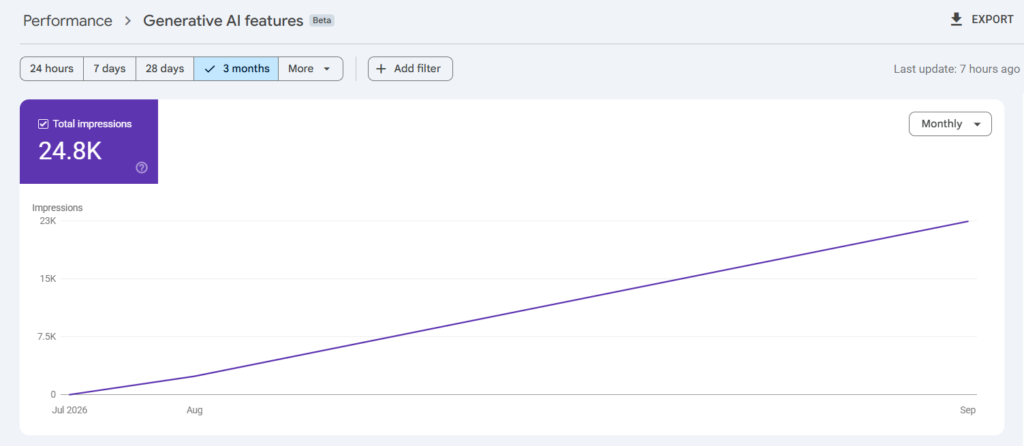
Google Search Console Generative AI features report for a client, three-month view showing 24.8K total impressions
Three-month view from a client account we manage, showing impressions in Google’s generative AI features, charted monthly. Screenshot taken 23 September 2026. See the full-size report and what it does and does not prove ›
Fixed monthly prompt panelMonthly AI citation reportNo guaranteed-ranking claimsWorks alongside your SEONo lock-in
Definitions

What AIO and GEO actually mean

Three acronyms get used interchangeably in this field. Here is how we use them, and what each one describes.

AIO — AI optimization

The broad practice of making a business understandable and quotable to AI systems: clear content, accurate facts, consistent brand information across the web.

GEO — generative engine optimization

The specific work of earning citations and mentions inside AI-generated answers, rather than positions in a list of links.

AEO — answer engine optimization

Often used as a synonym for GEO. Where people distinguish it, AEO leans toward direct question-and-answer formats and featured snippets.

The short version. Traditional SEO competes for a place in a list of ten links. GEO competes to be the source an AI system quotes when it writes the answer instead. The underlying signals overlap heavily, which is why the two disciplines work best together rather than as alternatives.
Why this matters

Search is changing, your visibility should too

AI assistants answer questions directly, often without a single click to a website. If your brand isn’t in the sources these systems trust, you’re invisible to a growing share of your market. GEO makes your content the material AI engines quote, cite, and recommend.

  • First-mover advantage. AI search optimization is where SEO was 15 years ago. Early brands win a lasting position.
  • Higher-intent traffic. Visitors who arrive from an AI recommendation already trust you, so they convert better.
  • Compounding with SEO. The same authority signals that rank you on Google make AI models cite you, one strategy feeds the other.

AI citations

Being named and linked inside AI-generated answers.

Brand recommendations

Appearing when assistants suggest providers.

Structured data

Machine-readable facts about your business.

Visibility tracking

Measuring where you appear, and where you do not.

Client example

What generative AI visibility looks like in Search Console

Google now reports impressions from its generative AI features. This is one client account, shown in full rather than cropped to the flattering part.

Performance › Generative AI features — 3 month viewUnedited screenshot
Google Search Console Generative AI features report for a client, three-month view showing 24.8K total impressions
What this report is. Google Search Console › Performance › Generative AI features (Beta) records how often a site's pages appear in Google's AI features, such as AI Overviews and AI Mode. It counts impressions only — it does not report clicks, position, or the prompts people typed.

What it shows

24.8K total impressions in Google’s generative AI features across the three-month window, starting from a baseline of effectively zero at the end of July.

How to read it

This is the monthly view, so each point is a whole month aggregated. That smooths the chart: the underlying daily figures were far more uneven, with activity concentrated in a few weeks.

What it does not prove

The report cannot attribute movement to any single cause, and impressions are not clicks. AI features are volatile, and Google changes when and where they appear.

Why we are careful with a chart like this. A rising line is easy to over-read. Independent research has found AI systems return different brand lists on repeated runs of the same prompt, so visibility in AI features genuinely fluctuates from day to day, and a monthly chart hides that movement by design. Judging this work means watching the trend across several months and being willing to say when a gain did not hold.

This is the only client AI-visibility data we currently publish. As more accounts build reportable history, we will add them here rather than describing results we cannot show.

Scope

What we actually optimise

AI systems assemble answers from content they can read, facts they can verify and sources they already trust. We work on all three.

Content structure

Rewriting pages so a direct answer sits near the top of each section, in self-contained passages an AI system can lift without losing meaning. Our free GEO citability score tool scores this.

Entity and brand data

Making sure your business, people, products and services are described consistently everywhere an AI model might look, so it treats them as one confident entity.

Structured data

Organization, Product, Service, FAQ and Article markup so your facts are machine-readable. Our schema generator produces the same markup.

Third-party sources

AI answers frequently cite review sites, directories and publications rather than your own site. Earning presence there is often the fastest lever, via digital PR.

Crawler access

Checking that AI crawlers can actually reach and render your content, and that nothing is blocked at the server, CDN or robots.txt level. An llms.txt file can help direct them.

Question coverage

Publishing genuine answers to the questions buyers ask assistants, including comparisons and pricing questions most sites avoid.

Platforms

Where we work, and how each one differs

Each AI surface builds answers differently, so the work is not identical across them.

Google AI OverviewsDraws heavily on pages that already rank well, so strong conventional SEO is the foundation. This is the surface Search Console now reports on, which makes it the one with real first-party data behind it.
Google AI ModeA fuller conversational experience built on the same index. Depth of topic coverage matters more here than a single well-optimised page.
ChatGPTCombines model knowledge with live web search. Consistent brand facts across many sources matter, because the model has to recognise you as an entity before it recommends you.
PerplexityThe most citation-led of the major assistants, listing its sources prominently. Clear, well-structured, factual pages do well here, and it tends to reward recency.
GeminiTied closely to Google's index and to your Knowledge Graph presence, so entity consistency and structured data carry real weight.
Copilot and ClaudeCopilot leans on the Bing index, which makes Bing Webmaster Tools worth setting up. Claude cites the web when browsing is used, and rewards clear, quotable writing.
These platforms change often. Rather than optimising for one system's current behaviour, we focus on the signals all of them share: clear content, verifiable facts, consistent entity data and genuine third-party presence. Our guide to tracking AI visibility explains how measurement works in practice.
How it works

How we earn your place in AI answers

The same sequence every month, with the first month weighted toward diagnosis.

1

AI visibility audit

We build a fixed panel of the questions your buyers actually ask and run it across the major assistants to record where you appear, where competitors appear instead, and which sources get cited.

2

Content restructuring

Existing pages are rewritten so answers are direct, self-contained and easy to extract, with the questions buyers ask covered explicitly.

3

Entity & schema work

Structured data, consistent business facts and profile clean-up across the sources AI systems cross-check.

4

Authority signals

Earning mentions and citations on the third-party sites that AI answers already draw from in your category.

5

Monitor & expand

The same prompt panel is re-run monthly so the trend is comparable, and the plan adjusts toward whatever is actually gaining ground.

Transparency

What we can and cannot control

This is a young discipline with a lot of marketing noise around it. Here is where the line sits.

What we control

How clearly your content answers real questions
Whether your facts are structured and machine-readable
Whether AI crawlers can reach and render your pages
How consistently your brand is described across the web
Whether you are present on the sources AI answers cite
How rigorously all of it is measured and reported

What nobody controls

Which brands a model names in any single answer
When platforms change how or where AI answers appear
Model training cut-offs and update schedules
Personalisation based on a user's location and history
Whether an assistant links out at all, or just summarises
Competitors doing the same work as you
We do not sell guarantees. Any agency promising a fixed position in ChatGPT answers, a set number of citations, or guaranteed AI Overview inclusion is describing something outside their control. What we commit to is the work, the measurement and an honest monthly read of both.
Every month

What you receive, and how it is reported

The same deliverables each month so progress is comparable, plus a written read of what changed and why we think it changed.

Prompt panel results — the same set of buyer questions re-run across the assistants, showing where you were cited, recommended or absent
Cited-source analysis — which third-party sites the answers drew on in your category
Search Console AI data — generative AI impressions where your property has the report, as shown above
AI referral traffic — visits arriving from AI assistants, separated out in analytics
Work completed — pages restructured, schema added, mentions earned
Next month's plan — what we will prioritise and the reasoning

The format follows the same plain-English approach as our monthly SEO reporting.

A realistic timeline

Month 1. Audit, baseline prompt panel, technical and crawler checks, first content and schema work.
Months 2–3. Restructured pages start being picked up. Early movement usually shows in citations before it shows in traffic.
Months 3–6. Authority and third-party presence build, which is the slower half of the work and the more durable one.
Ongoing. Re-measurement each month, with the plan following whatever is actually working.

Content and schema changes can surface within weeks because AI platforms refresh sources faster than classic rankings. Authority-driven gains build over months, and can move backwards as well as forwards.

Fit

Who wins with AIO and GEO

The businesses that gain most are the ones buyers research before choosing.

E-commerce brands

Product and comparison questions are exactly what people now ask assistants before buying.

SaaS companies

Tool comparisons and alternatives are among the most common AI queries in software.

Local businesses

Assistants increasingly answer “who should I use near me” style questions.

Experts & consultants

Being quoted as a named authority is how expertise surfaces in AI answers.

Arabic-market brands

Arabic AI search is less competitive than English, so presence is easier to establish early.

Publishers & blogs

Citation visibility matters when AI answers summarise rather than link.

When it is not worth it yet. If almost nobody searches for what you sell, if your site has serious unresolved technical problems, or if you need leads this month, GEO is the wrong first spend. We will say so. A technical audit or conventional SEO usually comes first.
Pricing

One plan for complete AI visibility

One monthly plan covering audit, content, authority and measurement.

AIO / GEO growth plan

A monthly plan covering the audit, content work, authority building, and AI citation tracking. Pairs perfectly with our SEO plan for full search coverage.

$350/month

The first month will be free once you are satisfied with our services.

  • AI visibility audit across 6 platforms
  • GEO content restructuring and creation
  • Schema and entity optimization
  • Digital PR and authority mentions
  • Monthly AI citation reports
  • 24/7 support, no lock-in
FAQ

AI optimization questions

The questions we are asked most often about AI search visibility.

Traditional SEO optimizes for ranked lists of links on search engines. GEO (generative engine optimization) and AIO (AI optimization) optimize your content so AI systems like ChatGPT, Gemini, and Google AI Overviews cite your brand inside their generated answers. The disciplines overlap and reinforce each other.
No, and treating it as a replacement is the most expensive mistake in this area. Google AI Overviews draw heavily on pages that already rank, and assistants with web access lean on the same authority signals. GEO extends your search strategy into AI answers; it does not substitute for the foundations.
They work best together. AI models draw heavily on the same authority and content signals Google uses, so a weak SEO foundation limits GEO results. Many clients run our SEO and GEO plans as one combined strategy.
No one can guarantee specific AI outputs, because models change and answers vary by user. What we do is systematically increase the signals AI systems rely on, structured content, authority mentions, and consistent entity data, which measurably increases how often you are cited.
We run a fixed panel of customer questions across ChatGPT, Perplexity, Gemini, Claude, Copilot, and Google AI Overviews every month, and report where your brand is cited, recommended, or missing, alongside AI referral traffic in your analytics.
Language models generate text probabilistically, and answers also shift with location, account history and wording. Independent research has found AI assistants rarely repeat the same brand list across repeated runs of one prompt. This is why we measure frequency across many prompts and months rather than treating any single answer as a result.
Content and schema changes can surface in AI answers within weeks because AI platforms refresh sources faster than classic rankings. Authority-driven gains typically build over 2 to 4 months, and visibility can move backwards as well as forwards.
It is a report under Performance showing how often your pages appeared in Google's generative AI features, including AI Overviews and AI Mode. It shows impressions only, broken down by page, country, device and date. It does not show clicks, position, or the prompts people used, so it is a useful signal rather than a complete picture.
There is no switch to flip. AI Overviews draw mostly from pages that already perform well in conventional search, so the work is strong SEO foundations plus content that answers the question directly and early on the page, supported by accurate structured data.
It combines what the model learned in training with live web results when browsing is used. That means consistency matters: if your business is described the same way across your site, your profiles, directories and press coverage, the model is far more likely to recognise you as a real entity worth recommending.
Perplexity is the most citation-led of the major assistants, listing its sources openly and leaning toward recent, clearly structured pages. Because it shows its sources, it is also one of the easiest platforms on which to see exactly which competitors and third-party sites are winning your category.
Gemini is tied closely to Google's index and to entity understanding, so Knowledge Graph presence, consistent business information and structured data tend to carry more weight there than on assistants that rely mainly on live search results.
A mention is when an answer names your brand. A citation is when it links to your site as a source. You can get either without the other, and both matter: mentions build consideration, citations bring traffic and show which of your pages an AI system trusts.
The main factors are how clearly your pages answer a question, whether the answer is self-contained enough to quote, whether your facts are structured and verifiable, whether AI crawlers can access your pages, and how often trusted third-party sources already mention you.
It is not a magic ingredient, but it removes ambiguity. Schema states your organisation, products, services, prices and FAQs in a machine-readable way, which makes it far less likely an AI system misunderstands or omits a fact about you.
Content that answers a specific question directly, near the top, in language that stands on its own when lifted out of the page. Comparisons, pricing explanations and honest "who this is not for" content perform unusually well, because most competitors avoid publishing them.
An AI visibility audit across six platforms, GEO content restructuring and creation, schema and entity optimization, digital PR and authority mentions, monthly AI citation reporting, and support with no lock-in. Scope is confirmed on the consultation call.
A monthly report covering your prompt panel results, which sources AI answers cited in your category, Search Console generative AI impressions where available, AI referral traffic, the work completed, and what we plan to prioritise next.
Businesses people research before buying: e-commerce brands, SaaS companies, consultants and experts, local service businesses and publishers. If nobody researches your category before purchasing, or your site has unresolved technical problems, conventional SEO is usually the better first investment.
Yes. Arabic AI search is even less competitive than English. We combine GEO with Arabic content and backlinks so your brand wins Arabic AI answers early.
Send us your website and the questions you think buyers ask before choosing a provider. We run an initial check across the major assistants and tell you honestly where you currently stand, what we would prioritise, and whether GEO is worth your budget right now.

Will AI recommend your brand?

Send us your site and the questions your buyers ask. We will run them across the major assistants and tell you honestly where you stand today.

No guaranteed-ranking claims · No lock-in · Reply within 24 hours

Scroll to Top