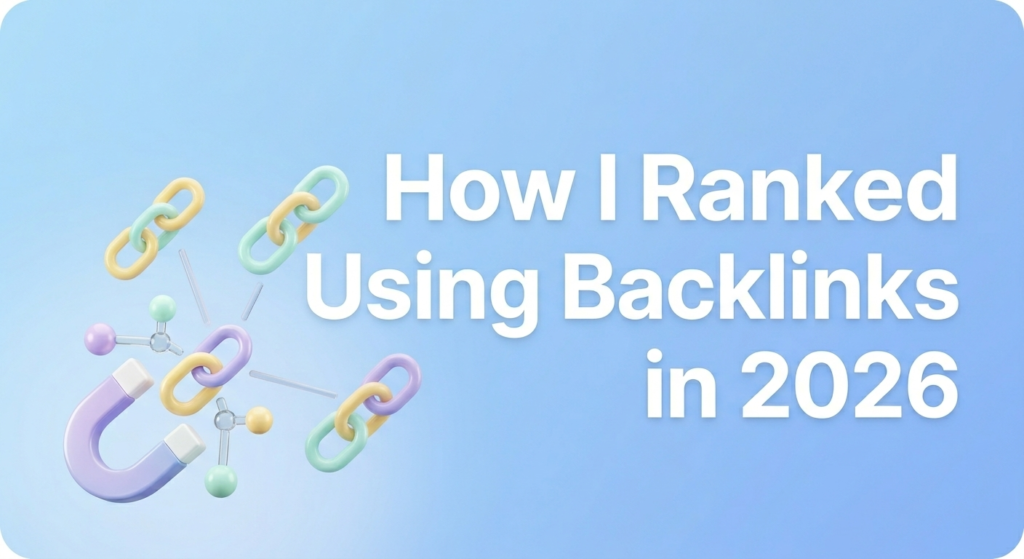
How I Ranked Using Backlinks in 2026?
Backlinks are one of the biggest ranking factors for a website. If Google does not trust your website, it becomes very difficult to rank. When you get backlinks, your website gets a boost. Backlinks are of different types: paid, free, medium, or ultra-paid, and many other types of backlinks. But in 2026, some other language sites are also offering backlinks now. So our topic is How I Ranked Using Backlinks in 2026. I’ll guide you step by step, and if you do not understand, click and you’ll get more tips.
1- Understand the Power of Backlinks
When I first launched my website, I noticed that my blogs were good but rankings were very slow. The main reason was lack of authority DA DR. Google needs signals that show a website is trusted and reliable, and backlinks provide that signal. Once I started building quality backlinks & Guest posts, my website began getting better indexing, higher impressions, and gradual ranking improvements.
Backlinks act like recommendations from other sites. The more relevant and trusted websites linking to you, the more Google believes your content deserves visibility
2- Competitor Backlink Analysis
Before building links, I analyzed competitors ranking on the first page. I checked where they were getting links from See in semrush, Ahref two most popular tools, which pages had the most backlinks, and what anchor texts they used. This helped me understand the level of competitions and create a clear backlink plan instead of working randomly. Competitor research saved time and allowed me to focus only on links that were already proven to work.
3- Using Different Types of Backlinks
In 2026, Links diversity is very important. I used multiple backlink types including:
Many sites in other languages now offer strong backlink opportunities you can also check from our Agency. These sites often have good authority with less competitions, which helped my rankings grow faster.
4- Focusing on Relevance Over Authority
Earlier, people chased only high Domain Authority websites. However, I learned that niche relevance matters more. Backlinks from marketing, SEO, SaaS, and digital business websites performed better than unrelated high-authority links.
Google now understands topic relevance, so I focused on backlinks connected to my industry.
5- Building Backlinks Consistently
One mistake many beginners make is creating too many backlinks at once. I avoided this and built backlinks consistently every month. This created a natural growth pattern and prevented ranking drops.
Slow and steady link building helped my keywords move from deeper pages to the top search results over time.
6- Smart Anchor Text Strategy
Anchor text optimization played a big role in my success. I used a natural mix of:
- Branded anchors
- Generic anchors
- Partial keyword anchors
- URL anchors
Avoiding over-optimization kept my backlink profile safe and natural in Google’s eyes.
7- Combining Content with Backlinks
Backlinks alone are not enough without quality content. Every new article I published was supported with backlinks and strong internal linking. This helped Google crawl my pages faster and distribute authority across the website.
Content builds value, while backlinks build authority both must work together.
8- Final Thoughts
Ranking in 2026 is not about shortcuts. My success came from focusing on quality backlinks, niche relevance, competitor analysis, and consistent effort. Backlinks remain one of the most powerful SEO strategies, but they must be built smartly and naturally.
If you want to rank today, invest time in building trustworthy backlinks, stay consistent, and always focus on long-term SEO growth